Showing posts with label history. Show all posts

6.07.2015

The Waiting Years: An Impression

6.07.2015
Borrowed from J. Gossen

I don't really love coming on here and writing "reviews" for books that are technically classics. Because, I mean, who am I? I know I'm not qualified to do that. So rather, I'm writing an impression. The Waiting Years is considered a classic in Japan, which is what makes it unique to what I - as an English speaking American - would consider classic literature. So technically, it wouldn't even fall into what we call the "Western Cannon."
Lately I've been on the hunt for one of two things: proper Japanese curry and English translated Japanese fiction. Japanese restaurants in my town are a dime a dozen, but they're entirely sushi restaurants (do people not realize that they eat more than just sushi in Japan? Probably not.) and exactly one restaurant serves Japanese style curry. Alas, it's pretty expensive. And as for Japanese fiction, well I'm working on it. If anyone can recommend something written by someone other than Haruki Murakami & Kazuo Ishiguro I'd be happy to hear them. (Nothing against them, it's just that I'm certain that there are more than 2 Japanese authors out there, just as I'm certain they eat more than sushi)

The Waiting Years isn't just a Japanese classic, but a Feminist classic as well. I think the major thing I'd like to point out before I begin is that I would have benefited from reading it in a college class - though it's little it's mighty. I know there's a lot I didn't understand that I might grasp a few years from now if I ever decide to reread it. Also, I just realized a lot of people reading this are probably students, and even after I say that I'm not qualified to have any lengthy, academic discussions about this novel, there's still a good chance that someone is going to use this as help for writing a paper. Meep! I am not worthy! But all this chatter aside, I'll do my best not to let you (and your grades) down.

The Waiting Years took Fumiko Enchi eight years to write, beginning during the American occupation. This is significant because at the time, women's roles in Japan were changing radically both legally and socially. Fumiko Enchi's story is a family history taking place during a huge societal shift as Japan was in the process of modernizing.
The story, told over the course of forty years, centers around a housewife of an aristocratic man. Initially, he sends her (Tomo) out to search for a concubine for him, and she eventually brings back a quiet,15-year-old Suga under the pretense that she will act as the family's maid. Suga captures not only the heart of Yukitomo, the husband, but becomes friends with their young daughter Etsuko.
Tomo suppresses her feelings and her hurt early on. In fact, it's very rare that she ever voices her emotions. Because of Tomo's role in society, she made many sacrifices on behalf of her husband. She raises Suga as part of the family, claiming responsibility for her as if she were her own daughter. Later, Yukitomo takes on a new concubine named Yuri. Yuri and Suga become close friends. Beautifully, there isn't any of the cattiness in this household that I would have expected. But after a decade or so, Yuri leaves the house and marries, leaving Suga behind. Suga, unfortunately, will never be able to marry and have children herself because she is barren - likely due to the fact that Yukitomo took her as a lover at such a young age. A third mistress enters the scene, but this time it is genuinely scandalous as Yukitomo has a long affair with his son's wife.
While it does a great job of exploring the lives of women at the time who have little real power but emotional power, it's still very vague and short. Perhaps I'd need at least a master's in Japanese feminist literature to fully understand it. But somehow it's reminiscent of some of my favorites: Du Maurier's Rebecca, Chopin's The Awakening, The Brontë Sister's, and Grau's The House on Coliseum Street.

5.25.2015

H is for Hawk by Helen McDonald

5.25.2015
Library e-book


This book, arrrgh! *grasps chest* Thiiis Boook!! Easily my favorite book I've read so far this year. I didn't read it because it's a New York Times bestseller (what's that?) or a winner of multiple literary awards (sounds neat-o, but I don't care). I, in all earnestness, read it because I recognized that the illustration on the cover was some sort of relief print (either lino-cut or woodcut - I was a printmaking student in college). All of those honors heaped upon this book was a complete waste on me. But more importantly, I wanted to read it because I love books on natural science and I did recognize that this book was gaining popularity in the literary crowd. I love natural science, but I've never visited a popular bookstore or library where their natural sciences were well trodden. It's unusual for this sort of thing to really shoot up on the best seller's list. Even though I would have been interested in this book no matter what, I think my interest in reading it was heightened just a tad more.

I was not anticipating this book to be a sum of what it actually was - it was more than a little book about hawks. I suppose that's why it's more widely loved - if it were just about hawks it wouldn't be so popular. H is for Hawk is a memoir about Helen Macdonald dealing with the death of her father. Ever since childhood, she's been obsessed with falcons, hawks, and other birds of prey. She'd even convinced her parents to take her to a falconry hunt. Now as an adult, he's an adjunct history professor, but overcoming her father's death has sent her back to her childhood obsession with hawks to where she has decided to train a goshawk. Goshawks, she'd been warned, are incredibly difficult to train. But maybe this is just the challenge she needs to keep her from wallowing.
During any particular stage of grief, most of us are recommended to read Eat, Pray, Love to help with the coping. (I know it was overwhelmingly prescribed to me.) While Elizabeth's wisdom is very helpful in Eat, Pray, Love, how many of us would actually be able to globe trot the way that she did following a divorce? Maybe some of us can, but I can promise that a huge percentage of the readers who made her book a best seller couldn't have. We were forced to live vicariously through her, though many of us were moved nonetheless. While certainly for various reasons most of us couldn't and wouldn't be able to train a hawk in response to loss or heart break, somehow it feels (to me, at least) more accessible. In her fits of mania, I recognized myself. Though we've grieved over different kinds of loss, grief is still the same.
So, this book is about ecology, dealing with grief, a little about a woman falconer, and a brief biography on the author T.H. White who not only wrote The Once and Future King, but wrote a masterpiece of a book called The Goshawk - very influential in Helen's training of her goshawk.

This book moved me deeply and may be the best thing I've read so far this year. Not only is it beautifully written, but I get it, I get it. I get wanting to hide from humanity and retreating (almost dangerously far) into a more wild world just a step apart from the one we live in now. I get it. For that reason alone, I can recommend this book highly, but I don't know if everyone will feel what she's saying. That felt so deeply personal, it's like she read my diary from 3 years ago, plagiarized my sketch books from across the Atlantic ocean, it's like she was "killing me softly." But I know she didn't, because even though everyone deals with their grief differently, it's still the same thing.

4.18.2015

Call the Midwife

4.18.2015
Kindle
I've been a big fan of the series Call the Midwife since around the time I was still watching Downton Abbey and I'm more or less still watching Call the Midwife, so that's what you should know about me.

I've been reading this on my somewhat inconveniently sized Kindle phone app, and now an actual Kindle, for about a year because damn that was ill-planning on my part. I really liked the book, even if it felt like a review of the TV show I'm already a big fan of. However, one of the larger issues is that you really have to be in the right mood for it. I loved this book, it's really, really good. But I understand that not everyone will be up to the emotional steamroller you'd be in for. I mean it, you really have to be in the right mood for it. Don't be fooled by those sweet looking children on the cover. Though, do let me put a finer point on it. I don't know if many men will be, ahem, man enough for this book as I know of a few fine fellows who have hidden in another part of the house when their wives had the show on.

I don't know how I should elaborate this. Well, you expect certain things to come up in a memoir about a midwife. But sometimes we might forget just how bad medical practices were in the 1950's - or at the very least, the extent of how bad they were (curious about more of that? Check out the Sawbones podcast). And that's for people who could afford it. Add to that the fact that most of the patents were extremely poor, living conditions were appalling, and hygiene was probably the 5th to last thing on everyone's minds. A good nurse can only do so much. Maybe part of the reason I found this book so icky is that I instinctively know that I could never, ever, ever, ever, ever do a nurses' job. We all have our talents and I would be so utterly ill-suited for it; I would never consider it. (I owe this to my lack of feeling for human life and less about my morbid curiosity for bodily function)
What really puts your heart through the wringer is how much poverty these people suffered. And I mean poverty of all kinds, not just financial. The people who were just poor money-wise were the happiest, as you see pretty often. She interacted with some real characters, from the patients themselves, to the nuns she lived and worked with (despite the fact that she wasn't Catholic or even religious at all), to the other nurses.
There are actually 3 volumes in this series of memoirs, which is pretty unusual in the world of memoirs. This is obviously the first, and I might eventually go on to read the other two, but I have no idea when because... Christ. Emphasis on you really have to be in the right mood. If ever you're in just too good of a mood and need to bring it down a notch, these books will probably be waiting for you.

1.23.2015

Spinning Straw Into Gold

1.23.2015
Amazon Used
This week caught me off my guard - I simply couldn't escape some unpleasant surprises. So here I am, my jaw sore from a surprise dentist visit, feasting on ice cream, mashed potatoes, and Ensure. I would admit to be miserable, but this is just the sort of thing I actually like because it means I get to catch up on my reading while I should be working. I personally believe that life has a way of throwing you off your daily rhythms when you're in need of a break that you might be just too stubborn to pause for. Such was the case this time!
I happened to find this book - lost or discorded, whichever the case, but momentarily forgotten - with only a few pages left unread.
I picked this book up as research for a personal project, which I've already reviewed a few other books for. This one was, after having read the others, more of a review on things I already knew by now. However, even though it mostly agreed with everything I've already studied about fairy tales, it also managed to have something fresh and original to say as well. If you're moderately interested in learning about reading between the lines of fairy tales, this is one of the books I would send you to (as well as Women Who Run With Wolves - though both of these might be considered "feminist" and might not be of a particular interest to male readers per say.) Like in the other books I've read, Joan Gould uses fairy tales to map out the particular crossroads women spanning all ages might meet in their lives, and explains what they might mean to you. Once again, it's interesting to me how fairy tales can be older than the hills but still be totally relevant to modern women. More so if you look a little closer than at face value.
The gimmick of the book is that it asks you "what is your favorite fairy tale?" and then it goes on to explain why it - and other, similar stories that aren't necessarily fairy tales (Jane Eyre, Pretty Woman, etc...) - might be significant to you. Once again, this is primarily focused on female readers.
It was very interesting, and I would love to share it with almost all of my lady friends, but I doubt they would have as much an interest in it as I had - they might have some arguments to make about it. But to me, it seems wholly sound.

9.22.2014

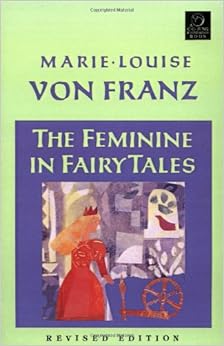
The Feminine in Fairy Tales

9.22.2014
Amazon Used
This isn't going to seem like a very interesting book, but I have to talk about it once I've finished it. As I've read this book in it's entirety as research for a personal project, it's not going to be much of a "review."

I would consider this book as more of an expansion of the materials you read about in Women Who Run With Wolves. I'm becoming quite the expert on particular stories and motifs (I joke that someone should just hand over my PhD any time they're ready - but we can talk about that when I scare up some grad school money maybe/eventually/never).
It does relay a lot of the same information that Women Who Run With Wolves covered, but examines it in closer and more academically, under a Jungian lens. Where Women Who Run With Wolves played more at women readers' sentiments, The Feminine in Fairy Tales asked you to examine yourself and others. Or rather, taught you how to. This wasn't a self-help book at all: it was philosophical and exploratory, but it focused more on the meanings behind the actions of common and uncommon fairy tales - not the reader. Still, it had gave me a lot to think about, personally, which is just a side effect.
It was fascinating, but not for the masses. For that, go to Women Who Run With Wolves. If, perhaps, you have a school paper to write - this makes excellent research. It can be bought on Amazon, but a quick Google search might scare up a PDF version, if you're a poor college student looking for some help.

5.09.2014

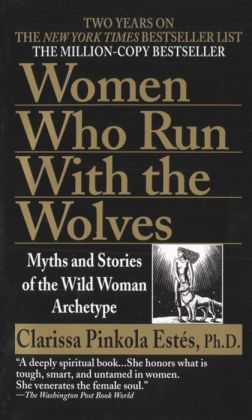
Women Who Run With The Wolves

5.09.2014
Amazon Used ($4 total)
An interesting thing happened while I was reading this particular book, which has been strongly recommended to me from various sources and bought for one cent (used) on Amazon (with shipping - $4 exactly). Though some women have expressed interest in it, men have definitely given me different reactions - for the most part very condescending reactions. Hopefully, my review will explain why that is a really unnecessary and ridiculous reaction. It is worth noting that while reading this book, it got a lot of negative attention - more so than when I read basically anything else. I got less negative attention while reading smarmy Christian romance novels. At least four different people have given it a quick glance and automatic disdain. Anyway, I don't expect this to be my most popular review.

So you should check your expectations at the door. While I can understand why some people would find the title off-putting, I'm still surprised by those strong reactions. Even more so because I know that those expectations are completely unfounded. If you are expecting this book to be a furious bohemian feminist manifesto or "self-help," you are absolutely wrong. The sub-title says it all - "Myths and Stories of the Wild Woman Archetype" - as in, Jungian Archetypes in Mythologies and Folktales Explained to YOU, Dear Reader. So yes, maybe that is a form of "self-help." "Wild Woman" really just means, "every female that doesn't fall into the same category as the virgin mother," in other words, every daughter, sister, mother, friend, lover who isn't pure and perfect. And that's basically all of us, no matter what.
It's academic, wise, and non-critical. While I started off reading it alongside The Heroine's Journey, I found that this book was more informative, fair, relaxed, and pleasant as a whole than the other book was. It's a good way to discover lesser known folktales and myths, if you're interested in that (which I completely am). It's wonderful if you want the common nuances and motifs in those sorts of stories explained, though remember that that means it's focused on feminine motifs.
It's also so inspiring! If anything, it was a great reminder and coach that in my own life, I should use these stories as guides for any season I find might find myself in - be it illness, grief, motivation, romance, family, career, whatever! It's almost as good as therapy and, uh, so much cheaper. I know I'm going to continue to revisit this book over and over, and I'd like to recommend it to all of the women that I know - provided that they're receptive to it.

12.13.2013

Walking With Mary

12.13.2013
Book Source: Blogging For Books
Whoops! It took me a little too long to write this review, but here goes nothing.
Walking with Mary is the latest book I got to review from Blogging For Books. I'm personally very interested in "unknown history" of the Bible. For most Christians the truth is hidden right in front of them, so the "unknown" is actually embarrassingly poorly disguised - if truth be told. But I'm fascinated with the quirks of history - such as why early Christians held women to a much higher value than we do now, because of Mary. (So put that in your juice box and suck on it!)
The Virgin Mary - so adored by Catholics throughout the world and history - is kind of a mystery. She only appears a few times in the New Testament, though she plays such an important role. This book uses her scant appearances to explain what we can't decipher on our own. And thankfully, he does it in very clear, lay-man's terms.

This did not prevent me, however, from shutting my brain down in boredom while reading this. It's a very slim volume, so it isn't tediously long, and the language isn't over-complicated. Yet still, Sri didn't any emphasize new information for me. He does frame Mary in a very interesting, honest, and realistic way. He made me reconsider what I thought I knew about The Holy Mother. Mary (though by unconventional means) is a mother first and foremost - which many women can relate to - and somehow I've never thought of it that way.

9.17.2013

The Abbess of Andalusia: A Spiritual Biography of Flannery O'Conner

9.17.2013
The Abbess of Andalusia is a unique biography on the Southern author, Flannery O'Conner. What makes it unique? Flannery was a Catholic woman in the Bible Belt South, and this book focused primarily on her faith - not entirely on her work.
I read this book in it's entirety during my weekly Eucharistic Adoration, since there is no restrictions on what you can do during your hour spent in chapel, as long as it is quiet and pious literature.

Flannery O'Conner is a very important and special figure to me, regardless of her religion - though that is a common bond we share. I love any Southern woman with a wicked, dry wit - and her stories are so dark and soul crushing. Talking about her with Catholics who have never heard of her has taught me that no one believes that she was actually Catholic. Surely someone who writes about murder so casually shouldn't be associated with The Holy Church! But that's what I love about her.
So, I never got to take a formal class on Flannery O'Conner's life and writings while in school, though I would have never passed on the chance if it had come up - but I'm the sort of person who will research the heck out of something that interests me anyway.

It's difficult to write a review on a biography the way one would for fiction. Everything is just laid out for you. But I can tell you what I learned from it. The whole "How Can This Be Catholic" criticism isn't new. During her life, Flannery wasn't well received for just exactly this. That the stories were actually parables for Christian life was lost on everyone but a few of her readers - and they were the sharpest readers. This book does not delve into her writing career. Rather, it focuses on her life with Lupus and how, though she suffered for a long time, she always took time to help her friends. To me, this is what Catholicism is about - sacrifice. To give up your time and interests and go out of your way to help someone, or even be kind to someone (that you may or may not like) will lead you to so many things. Thats the basic long and short of it. Flannery would continue long correspondences with friends and fans, advising them in all manner of things. I think she still may be, because she set a few things straight with me through this book.

If you're a fan of Flannery O'Conner, I recommend this book (published by Tan Books) - especially if you are interested in religious studies. To my knowledge, there are no other books written about Ms. O'Conner's spirituality. This one is well researched and an interesting read.


7.30.2013

Happy Birthday, Emily Bronte!

7.30.2013
Today is the 195th birthday of one of my favorite authors - the reclusive, moody, brilliant Emily Brontë. When I first discovered her as a high school sophomore, I found a kindred spirit. In fact, I started to doubt wether or not reincarnation couldn't be possible. Our personalities - our fierce privacy, our distaste for society, our love of animals and nature, and our contradictory vivaciousness - were so similar, that for the first time in my life I seriously thought she and I could have been one in the same. Now, that is probably untrue. Just some whimsy from a imaginative teen. But regardless, I continue to be a big fan, especially because we are regardless cut from the same cloth.

Here are some neat facts about Emily:

  • Emily almost never left her house. In fact, even though her father was the parish vicar, she wouldn't even leave the house on Sundays.
  • When her sisters Charlotte and Anne decided to publish their works (under the masculine pen names Currier, Ellis, and Acton Bell) Emily was the one who initially fought it. She did not want the world to see her private writings, even though of all of her siblings she might be the most talented. So we should be grateful for Charlotte and Anne.
  • Emily rescued animals. Besides her sisters, father, and brother, her pets were her closest friends. She had one pet dog in particular named Keeper. He was a mutt, but was fiercely loyal to Emily and loved her more than anything. It was said that Keeper once got into a fight with a pack of local dogs, as Keeper was wont to do. Emily would appear on the scene and would physically beat back the dogs to separate them. Once, when Keeper got into a scrap with a dog that had rabies she and was bitten, she calmly returned to her house, got a hot poker from the hearth, and castrated herself. Talk about a fierce Victorian bitch! Eventually, her aunt sent all of her pets away without telling Emily. Something she couldn't easily forgive.
  • Though Emily is famous for her only novel Wuthering Heights, she was an exceptional poet. Emily died at the age of 30. But Charlotte based her character Shirley, in the novel of the same name, on her younger sister. So if you're interested in getting a 3rd hand glimpse of what her character was like, add that to your reading list.

7.14.2013

Manga Manifesto, Bride's Story, and Sakuran

7.14.2013
I made a promise to talk about every book I've read from cover to cover - I also made a promise to talk a little about everything I read while away on vacation, and that it would be a lot. But I've never written reviews for comic books until now. Interestingly, because I've been a huge fan of manga since I was 13. College almost killed that joy, but in the past year I've reconciled with it.
A note on comics, manga, and shojo: Manga might not be as popular now as it has been in the last few years. That's okay, because it's still really huge. I understand that in the wide, wide world people still think of comic books as "for the boys," and that's still largely true - in American comics. With the introduction of manga in the US, and the shojo genre with it, there was finally something on the market for girls to read. I understand that Marvel and DC have tried (with limited success) to introduce something marketed towards girls. The thing is, they always seem completely clueless as to how to navigate those waters. I really think the popularity of manga has a lot to do with having a HUGE female audience. In 2001, I was one of those kids that helped make manga so popular. Manga, particularly CLAMP's Cardcaptor Sakura, introduced me to comic books. In the early oughts the quality and quantity of manga available doesn't compare with what it is today. Anime and manga was still a very niche market. It was rare and expensive, but the fans didn't take themselves so seriously and it was still, well, fun. All the same, when people tell me that girls don't read comic books, I think of shojo manga - a genre made for and adored by women all over the world.

Comics makes great beach reads, too. It's a breeze to read through and doesn't take the same amount of concentration that novels require. Personally, I find it hard to read anywhere that isn't perfectly quiet and private. Hotel rooms with TV's blaring, bustling pool sides, etc can be very distracting to me, even when they don't mean to be - I'm particular about my surroundings. But when I'm reading comics, none of that is an issue. That's how during this trip I managed to read 5 volumes of manga and a leetle bit of Clash of Kings.

I started the series Bride's Story by Kaoru Mori - the first three volumes of it, at least. Bride's Story is gorgeously illustrated and richly detailed. I'm personally a big fan of historic fiction and costume drama, and if you are too that this'll be your cuppa. Bride's Story is set in Central Asia's Silk Road, a setting that isn't often seen fictionalized in Western literature. That alone makes it worth a read, in my opinion.

It's about a young boy who takes a 20 year old woman from a semi-nomadic tribe as a wife. As you can imagine, there is some nudity, but it's nothing I think you'd try to hide your kids from. ... Unless it's that big of a deal to you. Honestly, it's a beautiful series with a very sweet story. Of all the manga I read this week, it's probably the best written. Even if you don't read graphic novels very often, I think this would still be interesting to a lot of women. Volume 1 introduced us to the characters and world, but not in the tired, worn out way that manga usually does it. In Volume 2, Amar (our favorite bride, who is really more of a big sister character - tough, but sweet) makes a new friend. There is some fighting over her - this is some of the family politics of the time, but it's basically resolved. Volume 3 is where the drama picks up. In fact, Amar and her child groom Karluk are barely in it. The volume ended on a cliff hanger involving a character that initially wasn't much more than a dippy side character. So I'm eagerly waiting to get my grubby little paws on volume 4.
If you're as curious about the daily lives of women and families on the silk road as you are dramatic stories - thinking along the lines of  Downton Abbey of Central Asia and The Silk Road - I do recommend this series highly.
I've quickly become a fan of Kaoru Mori's work, and it's surprising that I'm only discovering her now. She's well known for Emma, which speaking of Downton Abbey, is Victorian romance about a maid, as Kaoru Mori is a bit of an anglophile. It won't be long before I pick up that manga series as well.

The next manga title I read over vacation was a one volume, shrink wrapped title called Sakuran ("Derangement" in English). Sakuran is set in Japan's Edo period, in the "pleasure quarter," about a courtesan. In other words, it's about a Japanese prostitute. Fun Facts About "Oirans": The way you could tell the difference between a geisha and courtesan at the time is the way that they tied their Obis. Geisha's tied theirs in the back while courtesans tied theirs in the front for easier access. Otherwise, they had a few things in common.
In Sakuran, Kiyoha is sold to a brothel at a young age and is trained from a maid up until she becomes one of the most popular courtesans in the house. She's very sassy and rude, which doesn't make her very popular in the brothel - all the other women she lives with basically hate her. But, that kind of spunk and feminine wiles makes her very popular with customers. The story doesn't so much center around how competitive her life is, but the impossibility of love. As bold and brash as she is, her story is very tragic.
As I've said, it's a shrink wrapped manga, which you understand means one thing - it's for mature readers only, please. But it means another thing, too. Shrink Wrapped Manga was pretty common in the late 90's not because so much of it was for mature audiences, but because the glue was so cheap. Bending the spin while reading, even just a little bit, meant that pages would drop out. I haven't seen that as often lately with manga, but that is definitely true here. If possible, try to read it online instead of buying a hard copy - or watch the movie is you're so inclined.

5.05.2013

A Game of Thrones: Book 1 of A Song of Ice and Fire

5.05.2013
(Or, "Lauren is a day late and a dollar short on a world-wide phenomena, but 
not for the first time.")

So, I guess you've all been wondering what I've been up to? Well, my friends, the short answer is This. The long answer is, "So help me, if you spoil this series I will find you and I will kill you, because I have little to no faith in Nerd Culture. You're all horrible. Shut your mouths and go breathe on some other poor girl."
There now. In my defense - not that I need one - when this book was published I was in the 3rd grade, and this isn't the sort of book you would just hand over to a 9 year old girl to read. Further more, when the series was released on HBO how was I supposed to know it was actually going to be good, despite the fact that I also do not have HBO. Further-further more, the series is tremendous and the truth of the matter is I was always kind of saving it for when I would have a long stretch of "too much time." Like, say I would find myself bedridden. Realistically, I've always assumed that if I ever found myself pregnant, I would be the kind of pregnant woman - like this one cousin I have - who spent her last trimester in bed due to complications. That's the perfect amount of time to spend on reading gargantuan fantasy novels! Then suddenly, I realized I shouldn't bank on any of these things. For one thing, waiting until early motherhood is possibly the worst time to read big books. Because you will never read another book again. I have it on pretty good authority. And, well, there really isn't any time like the present after-all. So I did it anyway.

What is there to say about this book that hasn't already been said? Answer: nothing. I'm just going to be agreeing with a bunch of people no matter what side they're on.
But I did enjoy it. A lot. I would be lying if I said I hadn't had make-out dreams with dear old Jon Snow (Yes, I know he's 14. Cut me some slack though. Even at 14, he's more of a man than most of you - so, suck it!) I realized that all of my girl friends and I are Arya Stark in our own way, and that's a good way to be. No one likes Sansa. I wanted very badly not to hate Sansa, but seriously she made it impossible at times, though I do pity her tremendously and sympathize with her. I can see there will (hopefully) be a lot of character growth where she is concerned. I dare say, Sansa may be the only character Martin wrote (so far as I can tell) that you have conflicted feelings about. He's really good at manipulating how you'll feel about his characters. If he wants you to hate someone, you will damn well hate them. No excuses. You will be tempted to throw the book or remote or whatever nearby object in disgust because of them. But the characters are complicated - in fact there are a lot of aspects of this series that'sthat's a really beautiful thing. I'm really happy to see a series like this become this popular. It's got something for everyone, and that's really neat. Now I have to get my hands on the TV show, maybe. Yeah, you guys haven't heard the last from this series.

4.08.2013

The Reader's Wish List

4.08.2013
Sorry guys, I'm still not quiet ready to update with a new book review. But I don't want to keep you guys completely in the dark.
This morning I watched a little YouTube video about a special book from The Smithsonian, and for the rest of the day, I just couldn't stop thinking of it. I don't really expect to find this book at my local booksellers, but I wouldn't mind having it in my personal collection.
As it is, I owe you guys a serious update. So I'm going to go all out and make this post about those special "books of my dreams" I've been wishing for.


First, This is the book I was just telling you about. If you know me, you know I have a certain affection for this topic. My last year of college, I spent a lot of time looking at similar plates, reading up on it. I had a lovely little book called "Natural Curiosities" in my back pack at all times. So this historic, scientific documents have been a huge influence for me. This video is really, really interesting, too. And if you want to look at more images you can find in the book, here's a good place to go.

The next book on my wish-list is Robert K. Massie's biography on Catherine The Great, which was released last winter or fall, I don't recall which. Anyway, now that it is out in paperback, it should be more affordable for someone like me, though no less intimidating. As much as I love reading books of history, they are rarely light reading.
Still, I love learning about powerful women. I like having strong female figures to look up to, and Catherine the Great is definitely one it doesn't hurt to be well-versed on. Speaking of powerful female figures, one of the best ones in modern times passed recently. I'm speaking of the amazing Margaret Thatcher. No, I'm sure she had no relationship to Catherine, so I'm just going to move on with my list.


The next book on my list is Ruth Ozeki's very, very recent A Tale For The Time Being, which is "Time BEing" as in a person - not as in "Oh, for the time being..." The premise of this story sounds really, really interesting - though also kind of trippy. In the way that the Japanese have mastered. From what I understand, the story is of a Canadian writer who discovers a Japanese school girl's diary washed up on a beach - in a Hello Kitty lunch box. (You can be sure, it was the Hello Kitty lunch box that got my attention at first.) From there, rest assured, things will get very much off the beaten track. This book is sure to be an original - so original, in fact, you will probably stop to scratch your dry, flaky scalp in befuddlement.

2.25.2013

Color: A Natural History of the Palette

2.25.2013
Personally, this was a very important book because through out my years studying art, it was the most highly recommended (though non-required) book by pretty much every single one of my instructors. There was one teacher in particular who read a passage from this book to every one of this classes. The passage was about the color yellow, and it is one of the most powerful passages you may ever have heard. Of course, this teacher is the sexiest live narrator I have ever met - he could read the phone book and it would give you goose bumps.
While most college professors will recommend outside reading to their students, it isn't often that the students will go out and read the book. That wasn't the case with this book, which is surprising because it's somewhat pricey for a struggling college students' budget (though nowhere near the price of a textbook, it's still an added expense considering art students are often restocking their supplies - so give the kids a break) The mere fact that I waited to find it at the public library (and it's taken me this long) with well worn, coffee stained pages says everything.

This book is for anyone who is an artist, enjoys art museums, enjoys natural history museums, or enjoys art & natural history museums. If you've ever looked at a painting and thought something besides "what was the artist thinking when he made this?" but wondered where the colors came from, then this is definitely the book you should be reading. It's something we often take for granted, the idea that paints and pencils might come from somewhere besides the art supply store. As Art students, we are taught early on that the cave painters were the greatest artists of all - not because of their accuracy and skill to recreate images, but because of their innovation and creativity. The fact that colors have histories of their own is something we almost always over look. It takes a rather huge leap to create something as humble as the color blue, as Tracy Chevalier's readers already know something about.
In fact, if any of this information was old to me, it's in part because of Art History classes and Tracy Chevalier's novels. But neither of those have covered as much information as this book.
The history of some pigments and minerals that we use in art today are often political and a little dull, but a lot are nothing of the sort. Many are just ghastly. For instance, there is a brown that is made from dead bodies - dead human bodies - traditionally mummies (or redheaded young men). There is a popular hue of red that is still made from crushed bugs (which is also used in red lipstick and Cherry Coke - don't fret, though. It's Organic.) There are pigments that have started wars, or nearly started wars. There are tales of pirates, Queens, lovers, mad scientists - everything that good, "colorful" stories should have. (a-hyuck-hyuck!)
I am totally with my teachers on this - it's a great book, and it should be on every artists' or art appreciators shelf, and everyone else should just read it.


Thoughts by Feast of Poetry & Drink of Prose. All rights reserved.
Blog design by Labina Kirby.